Guide · emergency lighting
The lights nobody notices until the day they matter.
Emergency lighting is the one system in a building that is only ever used on the worst day, which is exactly why it has to be proved on the ordinary ones. Rick is responsible for over 600 emergency light fittings across managed properties in Salford and Manchester — installing them, testing them on schedule, and recording the results so there is something to hand an inspector.
Where it applies
- Communal stairs, corridors and lobbies in blocks of flats
- Escape routes and final exits in commercial premises
- Monthly function testing and annual three-hour duration testing
- Fittings that failed a duration test and need replacing
- New installations and extensions to an existing system
- Landlord's supplies feeding communal emergency and fire alarm circuits
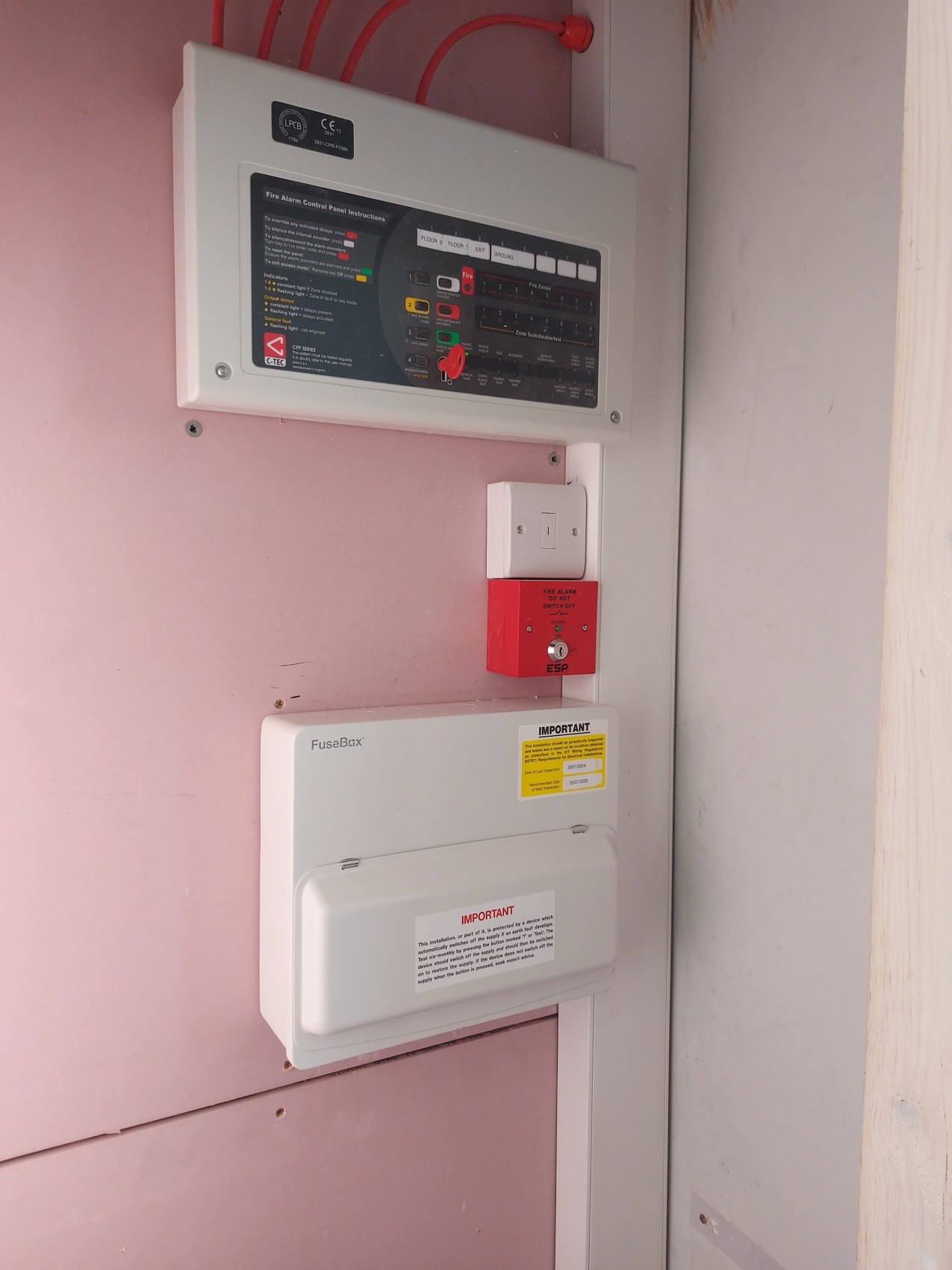
Communal panel and landlord's board — one of Rick's managed properties
The testing schedule
Monthly, yearly, written down.
01
Monthly function test
Supply to each fitting is interrupted briefly to confirm the lamp strikes on its own battery and the charge indicator returns afterwards. Short, non-disruptive, and the test that catches most failures — batteries die quietly.
02
Annual three-hour duration test
Once a year the system runs on battery for its full rated duration. It is the only test that proves a fitting will still be lit at the end of an evacuation rather than the start of one, and it needs scheduling when the building can afford the recharge time afterwards.
03
Failures replaced, results written down
Anything that will not hold its duration gets replaced, and the test, the result and the remedial work go in the log. A system with no records is, as far as anyone inspecting is concerned, a system that has never been tested.